

how to reset circadian rhythm starts with fixing the signals your brain uses to decide when to feel awake, sleepy, hungry, and alert.
If your sleep schedule is drifting later, you wake up exhausted, or you feel wired at night, your internal clock may be out of sync. The good news is that most people can improve it with light timing, consistent wake times, meal timing, movement, and a calmer evening routine. The hard part is that it usually takes several days of boring consistency, not one perfect night.
Key Takeaways
- Morning light and a fixed wake time are the strongest daily anchors for resetting your body clock.
- Evening light, late caffeine, irregular meals, and weekend sleep swings are common reasons your rhythm stays stuck.
- Most mild circadian rhythm problems improve within 3 to 14 days, but shift work, jet lag, insomnia, and medical conditions may need a more careful plan.
- What Your Circadian Rhythm Is and Why It Gets Disrupted
- Step by Step Guide to Reset Your Circadian Rhythm
- Advanced Analysis and Common Pitfalls
- Conclusion
- FAQ
What Your Circadian Rhythm Is and Why It Gets Disrupted
Your circadian rhythm is a roughly 24 hour timing system controlled by the brain and influenced by light, darkness, meals, activity, temperature, and social habits. The National Institute of General Medical Sciences explains that circadian rhythms affect sleep, hormone release, digestion, body temperature, and many other daily functions.
The main clock sits in a part of the brain that responds strongly to light. Morning light tells your body that the day has started. Darkness at night allows melatonin to rise, which helps prepare your body for sleep. When those signals are clear and repeated, sleep timing becomes more predictable.
Problems usually start when your daily cues conflict. You may wake late on weekends, scroll in bright light at midnight, eat a large meal close to bed, drink caffeine in the afternoon, or stay indoors all morning. Your brain receives mixed messages, so it delays sleepiness, lowers morning alertness, and shifts your energy peak to the wrong part of the day.
This is why simply forcing yourself into bed earlier often fails. If your internal clock still thinks it is early evening, lying in bed at 10 pm can feel frustrating. You may toss, check the time, and train your brain to associate bed with stress. Resetting your rhythm works better when you move the entire pattern of cues, not just bedtime.
Sleep quality also depends on your sleep environment. Darkness, steady sound, comfortable bedding, and a cool room can support your clock. If your bedroom is too bright, start with a simple fix like better window coverage. Our guide to blackout curtains explains how to block light in a way that still works for real bedrooms, not just perfect hotel rooms.
Sound can matter too. If outside noise keeps waking you, a consistent background sound may help reduce sudden disruptions. You can learn practical setup tips in our white noise essentials guide.
Step by Step Guide to Reset Your Circadian Rhythm
The best reset plan is simple, repeatable, and strict for at least one week. Do not try to change every health habit at once. Focus on the timing cues that directly affect your internal clock.
Step 1: Choose a fixed wake time and protect it daily
Pick a wake time you can keep seven days a week. This is more important than bedtime at first. If you wake at 7 am on workdays and 11 am on weekends, your body clock keeps shifting back and forth. That creates a pattern similar to mild social jet lag.
Set your alarm for the same time each morning, even after a poor night. This is uncomfortable for a few days, but it builds sleep pressure for the next night. If you nap hard after a bad night, sleep pressure drops and the cycle continues.
Step 2: Get bright light within the first hour
Morning light is one of the strongest cues for shifting your circadian rhythm earlier. Go outside for 10 to 30 minutes soon after waking. Cloudy daylight is still useful, and outdoor light is usually much brighter than indoor lighting.
If you cannot go outside because of weather, safety, or work schedule, sit near a bright window or consider a light therapy lamp. Be cautious if you have bipolar disorder, eye disease, or take light sensitive medications. In those cases, ask a clinician before using intense light therapy.
The CDC notes that sleep affects physical and mental health, and consistent sleep habits can support better rest. Morning light is one of the most practical ways to make those habits stick.
Step 3: Dim your evenings before you feel sleepy
Do not wait until bedtime to reduce light. Start 60 to 90 minutes before bed. Lower room lights, avoid bright overhead lighting, and reduce phone brightness. Blue light is not the only problem. Bright light of any type can delay sleep timing if it hits your eyes late at night.
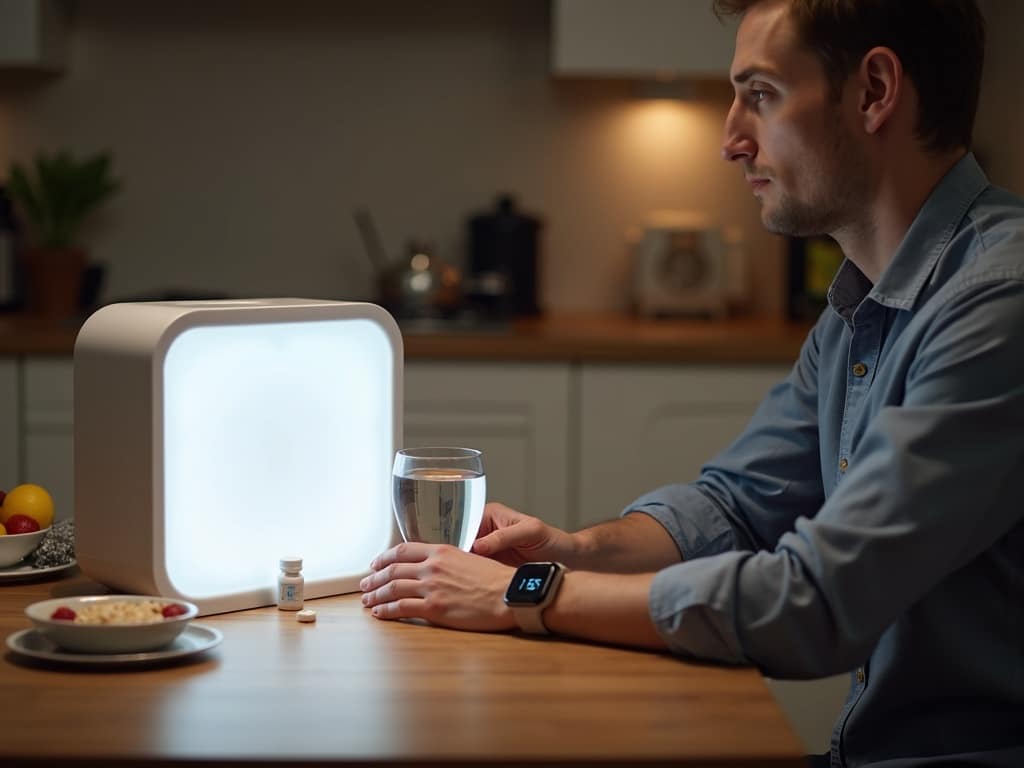
If you must use screens, use night settings, keep the device farther from your face, and choose low stimulation content. Work email, intense games, arguments, and stressful news can keep your nervous system alert even when the lights are dim.
Step 4: Set a caffeine cutoff
Caffeine can stay active for hours. For many people, noon to 2 pm is a reasonable cutoff. If you are sensitive, stop earlier. If you drink large amounts, reduce gradually to avoid headaches and irritability.
Do not judge caffeine only by whether you can fall asleep. It may still reduce deep sleep or increase nighttime waking. That means you can be technically asleep but still wake feeling unrested.
Step 5: Time meals to support your new schedule
Your digestive system follows circadian signals too. Eat breakfast or a first meal at a consistent time after waking. Avoid heavy meals close to bed, especially high fat meals that sit in the stomach. If you wake hungry at night, review whether you are under eating during the day rather than solving it with a large late snack.
Alcohol deserves special attention. It may make you sleepy at first, but it often fragments sleep later in the night. If your rhythm is already unstable, alcohol can make the reset feel much harder.
Step 6: Move your body earlier in the day
Exercise helps sleep, mood, and body clock stability. Morning or afternoon movement is ideal during a reset. A brisk walk after waking combines light, movement, and a clear start signal.
Hard workouts late at night can be fine for some people, but they can delay sleep for others. If evening workouts leave you wired, shift intensity earlier and use gentle stretching at night. Our guide on yoga for muscle recovery includes slower routines that can fit better into an evening wind down.
Step 7: Build a boring sleep routine
A good routine is not dramatic. It is predictable. Try a 30 to 45 minute sequence you can repeat most nights. For example, dim lights, prepare tomorrow’s clothes, take a warm shower, stretch lightly, read something calm, then get into bed.
Comfort matters because pain and tension can interfere with sleep timing. If sore muscles make it harder to settle, basics like hydration, gentle movement, and mineral intake may help. You can read more about magnesium for muscle recovery and sleep if cramps or muscle tightness are part of your nighttime problem.
Bedding can also affect whether you stay asleep. If you overheat or feel physically restless, your rhythm may not be the only issue. A breathable comforter, supportive pillow, or calming blanket may help some sleepers. See our guides to choosing a down comforter and using a weighted blanket for deeper rest.
Step 8: Use melatonin carefully, not casually
Melatonin is a timing signal, not a knockout pill. Some people take too much or take it too late. That can cause grogginess, vivid dreams, or no benefit at all. If you use it, many sleep specialists suggest lower doses taken a few hours before the desired bedtime, but your situation may differ.
Talk with a clinician first if you are pregnant, have epilepsy, take blood thinners, use sedatives, have autoimmune conditions, or are giving it to a child. The American Academy of Sleep Medicine offers general healthy sleep habit guidance, but personal medical advice is still important when supplements or sleep disorders are involved.
Advanced Analysis and Common Pitfalls
Resetting your rhythm is not always smooth. You may feel worse for a few days before you feel better. That does not always mean the plan is failing. It may mean your body is adjusting to a new schedule.
Pitfall 1: Trying to fix bedtime without fixing wake time
This is the most common mistake. People go to bed early, cannot sleep, then sleep late the next morning to recover. That keeps the internal clock delayed. Wake time has to stay consistent long enough for bedtime to become easier.
Pitfall 2: Using weekends as a reward
Sleeping in for several hours on weekends can undo weekday progress. If you need extra sleep, keep it modest. A 30 to 60 minute difference is usually less disruptive than a three hour shift.
Pitfall 3: Staying indoors all morning
Indoor light is often too weak to strongly anchor your clock. You may feel like you are awake because you are working, but your circadian system may not be receiving a strong daytime signal.
Pitfall 4: Making evenings too stimulating
Many people dim the lights but keep the brain activated. Work, conflict, intense media, and late exercise can keep alertness high. Your rhythm responds to behavior, not just bulb brightness.
Pitfall 5: Ignoring pain, stress, or recovery needs
If your sleep is poor because of pain, injury, or stress, a circadian reset may help but not solve everything. Persistent pain can cause repeated awakenings and make your sleep feel broken. If muscle discomfort is part of the issue, our guide on how to speed up muscle strain recovery can help you handle recovery habits without relying on late night restlessness.
| Problem | Likely Cause | Practical Fix | Expected Timeline |
|---|---|---|---|
| Can fall asleep only very late | Delayed light exposure, late screens, inconsistent wake time | Fixed wake time, morning outdoor light, dim evenings | 5 to 14 days |
| Wake up too early and cannot return to sleep | Stress, early light, too much time in bed, alcohol | Keep room dark, reduce alcohol, avoid going to bed too early | 1 to 3 weeks |
| Sleepy all day after starting reset | Sleep debt and sudden schedule change | Use short naps before 3 pm if needed, keep wake time steady | 3 to 7 days |
| Shift work sleep problems | Work hours conflict with natural light and social schedule | Use timed light, dark glasses after shifts, blackout sleep space | Ongoing management |
| Jet lag | Rapid time zone change | Adapt light, meals, and sleep to destination time | Several days depending on time zones crossed |
Shift workers need special care. A standard morning light plan may be wrong if your sleep period is during the day. For night shifts, bright light during the work period and darkness after work may be more useful. Dark sunglasses on the commute home and a cool, dark bedroom can protect daytime sleep.
Jet lag also requires timing. Traveling east often feels harder because you need to fall asleep earlier. Traveling west can be easier because staying awake later is more natural for many people. Light exposure at the wrong time can make jet lag worse, so adjust gradually when possible.
If you have chronic insomnia, loud snoring, gasping during sleep, restless legs, severe depression, panic at night, or extreme daytime sleepiness, do not assume your circadian rhythm is the only issue. Sleep apnea, mood disorders, thyroid problems, medication effects, and restless legs syndrome can look like a broken body clock. The National Heart, Lung, and Blood Institute explains that sleep deficiency can affect the brain, heart, immune system, and daily performance, so ongoing symptoms deserve proper evaluation.
Another realistic issue is family life. Babies, kids, caregiving, pets, and shared bedrooms can disrupt a perfect routine. Aim for the strongest signals you can control. A consistent wake time, morning light, and darker evenings still help even when nights are not perfect.

Conclusion
Resetting your circadian rhythm is less about forcing sleep and more about sending your body the same signals at the same times. Start with a fixed wake time, get outdoor light early, dim your evenings, control caffeine, keep meals consistent, and make your bedroom dark and calm.
Give the plan at least one full week before judging it. If symptoms are severe, long lasting, or linked with breathing problems, mood changes, or extreme fatigue, speak with a qualified health professional.
If you want a realistic place to begin, choose tomorrow’s wake time tonight, set your light plan, and remove one evening habit that keeps you wired. That is the simplest first step in how to reset circadian rhythm.
FAQ
How long does it take to reset a circadian rhythm?
Many mild schedule problems improve within 3 to 14 days. A small shift may take only a few days, while long term delayed sleep, shift work, or jet lag across several time zones can take longer. Consistency matters more than intensity.
Can pulling an all nighter reset my sleep schedule?
It can make you tired enough to sleep earlier once, but it often backfires. Sleep loss can increase cravings, stress, irritability, and poor decisions the next day. A fixed wake time with morning light is usually safer and more reliable.
What is the fastest natural way to reset my body clock?
The fastest natural approach is to wake at the same time daily, get bright outdoor light within the first hour, avoid bright light at night, stop caffeine early, and keep meals on a predictable schedule. These cues work together.
Should I take melatonin to reset my circadian rhythm?
Melatonin may help some people when taken at the right time, but it is not ideal for everyone. Dose, timing, medications, medical history, and age matter. Ask a clinician if you have health conditions, take medications, or plan to use it regularly.
Why do I feel tired during the day but awake at night?
This often happens when your circadian alerting signal is delayed. You may also be dealing with sleep debt, late caffeine, stress, too much evening light, inconsistent wake times, or a sleep disorder. Track your wake time, light exposure, caffeine, naps, and bedtime for one week to spot patterns.