


best muscle recovery tools can help reduce soreness, improve blood flow, support mobility, and make training feel sustainable, but only when you choose the right tool for the right recovery problem.
If your legs feel heavy after strength training, a massage gun might help. If your lower back is irritated, heat and gentle movement may be smarter. If you are recovering from a strain, aggressive tools can make things worse. The goal is not to collect every gadget. The goal is to build a simple recovery system that matches your body, your workouts, and your pain level.
This guide breaks down the most useful recovery tools, how to use them, when to avoid them, and how to combine them with sleep, nutrition, hydration, and smart training. If you are dealing with an actual strain or tear, also read this guide on how to speed up muscle strain recovery before using intense pressure or vibration.
Key Takeaways
- The most useful recovery tools are the ones that match your problem, such as soreness, stiffness, swelling, tension, or limited mobility.
- Massage guns, foam rollers, compression boots, heat, cold, TENS units, and mobility tools can help, but overuse can delay recovery.
- Tools work best when paired with sleep, protein, hydration, light movement, and proper training load.
- What Muscle Recovery Tools Actually Do
- How to Use Muscle Recovery Tools Step by Step
- Advanced Analysis and Common Pitfalls
- Conclusion
- FAQ
What Muscle Recovery Tools Actually Do
Muscle recovery tools are products or devices that help your body return to normal function after exercise, stress, tension, or minor discomfort. They may support circulation, reduce perceived soreness, relax tight tissue, improve range of motion, or help you calm your nervous system before sleep.
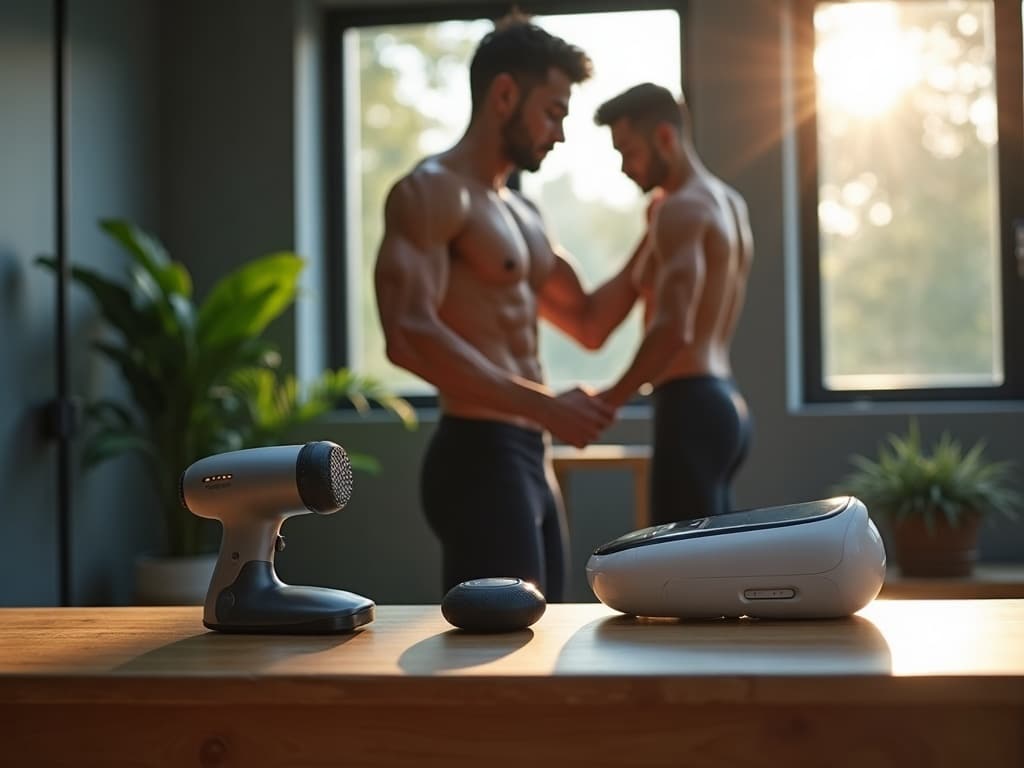
The key word is support. A tool does not rebuild muscle by itself. Your body repairs tissue through rest, nutrition, fluid balance, and gradual loading. Tools can make that process feel better and sometimes more efficient, but they cannot replace recovery basics.
The American College of Sports Medicine explains that recovery is affected by training stress, sleep, nutrition, and individual fitness level. This matters because a tool that helps one person may not help another person in the same way.
What problems do recovery tools solve?
Most recovery tools fit into one of six categories:
- Soreness relief: Massage guns, foam rollers, massage balls, and compression tools can reduce the feeling of delayed onset muscle soreness.
- Mobility improvement: Stretch straps, foam rollers, and massage balls can help you move better before or after training.
- Circulation support: Heat, sauna, light movement, and compression may improve blood flow and reduce heavy legs.
- Pain control: TENS units, heat pads, topical gels, and targeted massage tools may help manage mild discomfort.
- Relaxation: Neck massagers, back massagers, hot stones, and red light routines can help reduce tension and stress.
- Recovery habit building: Simple tools can remind you to slow down, breathe, hydrate, and stay consistent.
The recovery tools worth considering
Here are the tools that make the most sense for most active people:
- Massage gun: Useful for large muscle groups such as quads, glutes, calves, and lats. Avoid direct pressure on joints, bones, bruises, and sharp pain areas.
- Foam roller: Best for broad pressure across large areas. It is affordable, simple, and easy to control.
- Massage ball: Good for smaller trigger points in feet, glutes, upper back, and shoulders. If you need a simple starting point, use these massage ball techniques.
- Compression boots: Helpful for heavy legs after running, cycling, or long standing days. They are expensive, so they are not essential for beginners.
- Heat therapy: Useful for stiffness, chronic tightness, and relaxation. Heat is not ideal for fresh swelling.
- Cold therapy: Can reduce pain and swelling after intense sessions or minor irritation. It may blunt some training adaptations if overused right after strength training.
- TENS unit: May help with pain management, especially for people who respond well to electrical stimulation. Pad placement matters, so review a TENS pad placement guide before using one.
- Red light therapy: Promising for soreness and tissue recovery, but results vary by device strength, distance, and consistency.
- Infrared sauna: May support relaxation, circulation, and perceived recovery. Learn more in this guide to infrared sauna for muscle recovery.
The best choice depends on the type of discomfort. Tight and stiff tissue may like heat and gentle massage. Fresh swelling may need rest, elevation, and careful cold exposure. General soreness often responds well to light movement, protein, sleep, and moderate pressure.
How to Use Muscle Recovery Tools Step by Step
A recovery tool should fit into a plan. Randomly blasting sore muscles with a massage gun for twenty minutes is not a plan. Use the steps below to build a simple routine that works without wasting time.
Step 1: Identify the recovery problem
Before you use any tool, ask one question: what am I trying to fix?
- If the area feels generally sore after training, use light movement, foam rolling, or gentle massage.
- If the area feels stiff but not painful, use heat, mobility work, and slow range of motion drills.
- If there is swelling, bruising, sharp pain, or loss of strength, do not use deep pressure. Consider medical advice.
- If the problem is poor sleep or high stress, use relaxation tools instead of aggressive muscle tools.
This step prevents the biggest mistake people make: treating every sensation like a muscle knot. A strain, nerve irritation, or joint problem needs a different approach than normal workout soreness.
Step 2: Choose one main tool and one support habit
Do not stack five tools at once. Start with one tool and one basic recovery habit. For example:
- Massage gun plus protein after lifting.
- Foam roller plus ten minutes of walking.
- Heat pad plus mobility work for stiffness.
- Compression boots plus hydration after long runs.
- Neck massager plus breathing before bed. If neck tension is your main issue, read this neck massager guide first.
Nutrition still matters. If soreness is constant and strength is dropping, your tool is not the only issue. Review your protein intake with this guide to protein powder for muscle recovery, and consider whether your overall diet supports repair.
Step 3: Use the right pressure
More pressure does not mean better recovery. Good pressure feels useful, not threatening. You should be able to breathe normally while using the tool.
Use this simple rule:
- 2 to 3 out of 10 pressure: Good for warm up, sore muscles, and sensitive areas.
- 4 to 6 out of 10 pressure: Good for most foam rolling and massage gun work.
- 7 out of 10 or higher: Usually too aggressive for regular recovery.

If you are grimacing, holding your breath, or tensing up, reduce pressure. Recovery tools should help the nervous system calm down, not make it guard harder.
Step 4: Time each session properly
Most people use recovery tools too long. Short sessions often work better because they reduce irritation.
- Massage gun: 30 to 90 seconds per muscle area.
- Foam roller: 1 to 2 minutes per large muscle group.
- Massage ball: 30 to 60 seconds on one tender spot, then move.
- Heat pad: 15 to 20 minutes for stiffness or relaxation.
- Cold pack: 10 to 15 minutes with a cloth barrier.
- Compression boots: 15 to 30 minutes for general leg recovery.
- TENS unit: Follow device instructions and keep intensity comfortable.
The Cleveland Clinic notes that rest, ice, compression, and elevation can be useful for certain minor injuries, especially when swelling is present. That does not mean ice is always best for every sore muscle. Match the method to the situation.
Step 5: Follow the tool with movement
A tool can temporarily make tissue feel looser. Use that window. After massage, heat, or foam rolling, add gentle movement that reinforces better range of motion.
Examples:
- After rolling calves, do slow ankle circles and calf raises.
- After using a massage gun on quads, do bodyweight squats.
- After heat on the lower back, do pelvic tilts and easy walking.
- After using a shoulder massage ball, do wall slides or band pull aparts.
This is where many routines fail. Passive tools feel good, but movement teaches the body to use the improved range. Keep it gentle. You are not trying to set a personal record during recovery work.
Step 6: Support recovery from the inside
Tools can reduce symptoms, but tissue repair needs nutrients and rest. Aim for enough protein, steady hydration, and consistent sleep. If cramps, sleep quality, or muscle tightness are ongoing problems, read this guide to magnesium for muscle recovery.
Some people also use amino acids, tart cherry juice, or other supplements. They can help in the right context, but they should not cover up poor sleep or excessive training. For a deeper supplement plan, compare options in this guide to muscle recovery supplements and this overview of the best amino acids for muscle growth and recovery.
Step 7: Track results for two weeks
Do not judge a tool after one use. Track a few simple signals for two weeks:
- Morning soreness level.
- Range of motion.
- Workout readiness.
- Sleep quality.
- Any increase in pain, bruising, numbness, or swelling.
If the tool helps, keep it. If nothing changes, stop using it and save your time. If symptoms get worse, the tool may be wrong for your issue.
Advanced Analysis and Common Pitfalls
Recovery tools are popular because they promise quick relief. The problem is that quick relief can hide poor training decisions. If soreness never improves, your body may need less volume, better technique, more food, or more sleep, not another gadget.
Pitfall 1: Using deep pressure on an injury
Deep massage on a fresh strain can irritate damaged tissue. Warning signs include sharp pain, bruising, swelling, sudden weakness, or pain that gets worse with movement. If that sounds familiar, review realistic timelines in this muscle tear recovery time guide.
The Mayo Clinic recommends medical attention for severe pain, inability to bear weight, numbness, or major swelling after an injury. A recovery tool should never be used to push through those signs.
Pitfall 2: Confusing soreness with readiness
You can feel less sore and still not be fully recovered. Pain relief does not always mean the muscle is ready for heavy loading. That is why your next workout should be based on performance, control, and pain free range of motion, not just how good you feel after a massage session.
Pitfall 3: Overusing cold therapy
Cold can reduce pain and swelling, but using it after every strength workout may not be ideal if your main goal is muscle growth. Some research suggests frequent cold water immersion after resistance training may reduce certain adaptation signals. A review available through PubMed discusses how cold water immersion can affect strength training adaptations.
This does not mean cold is bad. It means timing matters. Use cold when pain or swelling is the main issue. Use food, sleep, and light movement when growth and adaptation are the main goals.
Pitfall 4: Buying expensive tools before fixing basics
Compression boots, red light panels, and high end massage guns can be useful, but they are not magic. If you sleep five hours, skip meals, and train hard every day, a premium tool will not solve the main problem.
Pitfall 5: Using tools with the wrong medical conditions
Some tools are not appropriate for everyone. People with blood clot risk, pregnancy, implanted electrical devices, severe neuropathy, open wounds, uncontrolled blood pressure, or serious circulation issues should speak with a clinician before using compression, heat, cold, TENS, or intense vibration.
Muscle recovery tool comparison
| Tool | Best For | Typical Use Time | Main Downside | Best User |
|---|---|---|---|---|
| Massage gun | Large muscle soreness and tension | 30 to 90 seconds per area | Easy to overuse or press too hard | Lifters, runners, active adults |
| Foam roller | General tightness and mobility | 1 to 2 minutes per muscle group | Can be uncomfortable on bony areas | Beginners and budget focused users |
| Massage ball | Small trigger points and foot tension | 30 to 60 seconds per spot | Too much pressure can irritate tissue | Desk workers, lifters, runners |
| Compression boots | Heavy legs and circulation support | 15 to 30 minutes | Expensive and bulky | Endurance athletes and frequent trainers |
| Heat pad | Stiffness and relaxation | 15 to 20 minutes | Not ideal for fresh swelling | People with chronic tightness |
| Cold pack | Pain and swelling control | 10 to 15 minutes | May be overused after strength training | Minor irritation or swelling cases |
| TENS unit | Pain modulation | Follow device instructions | Does not repair tissue directly | People managing recurring discomfort |
| Infrared sauna | Relaxation and blood flow support | 10 to 20 minutes to start | Heat stress and dehydration risk | Experienced users who hydrate well |
How to build a smart recovery stack
A recovery stack is a small group of tools and habits that work together. Keep it simple:
- Budget stack: Foam roller, massage ball, walking, protein, water, sleep.
- Strength training stack: Massage gun, mobility drills, protein powder, magnesium, planned rest days.
- Runner stack: Compression socks or boots, calf massage ball, easy cycling or walking, tart cherry juice, sleep tracking.
- Desk worker stack: Neck massager, back massager, heat pad, hip mobility, standing breaks.
- High stress stack: Heat, breathing, red light routine, gentle stretching, earlier bedtime.
If lower back discomfort is part of your recovery problem, be careful with aggressive pressure. Start with gentle walking, heat if stiffness is present, and controlled mobility. You can also read this guide on pulled lower back muscle recovery time for safer expectations.
For back tension that is not linked to an acute injury, a targeted device may help. This guide explains how to use a back massager without overdoing it.

Conclusion
Recovery tools can be useful, but they work best when you use them with a clear purpose. Start by identifying the problem. Choose one tool. Use moderate pressure. Keep sessions short. Follow with gentle movement. Then support the process with sleep, protein, hydration, and smart training choices.
A massage gun, foam roller, massage ball, heat pad, cold pack, TENS unit, compression tool, or sauna can all have a place. None of them should be used to ignore sharp pain, swelling, weakness, or worsening symptoms.
If you want a practical starting point, choose one of the best muscle recovery tools that matches your biggest issue today, use it for two weeks, track your results, and adjust based on what your body actually tells you.
CTA: Pick one tool from the comparison table, pair it with one recovery habit, and build a simple ten minute routine you can repeat three times this week.
FAQ
What is the best muscle recovery tool for beginners?
A foam roller or massage ball is usually best for beginners because both are affordable, simple, and easy to control. Start with light pressure and short sessions before trying more intense tools like massage guns or compression boots.
Are massage guns good for muscle recovery?
Massage guns can help reduce soreness and improve how muscles feel after training. They work best on large muscle groups. Avoid using them on joints, bones, bruises, fresh injuries, or areas with sharp pain.
Should I use heat or cold for sore muscles?
Use heat for stiffness, tightness, and relaxation. Use cold when swelling or pain control is the main goal. For normal workout soreness, light movement, hydration, protein, and sleep are usually more important than heat or cold.
How often should I use recovery tools?
Most people can use light recovery tools several times per week. Intense pressure should be limited. If a tool makes pain worse, causes bruising, or leaves the area more sensitive the next day, use it less often or stop.
Can recovery tools replace rest days?
No. Recovery tools can support rest, but they cannot replace it. Muscles still need time, nutrients, and sleep to repair. If performance is dropping and soreness is constant, reduce training load before adding more tools.