

### Blog Post:
yoga for muscle recovery works best when you use it as gentle movement, not as another hard workout.
If your legs feel heavy after lifting, your hips are tight after running, or your back feels stiff after sitting and training, the right yoga routine can improve blood flow, calm the nervous system, and help you move better the next day. The wrong routine can do the opposite. Deep stretching, long holds, and aggressive poses too soon after intense exercise can irritate sore tissue and slow your return to normal training.
This guide shows you how to use yoga in a practical recovery plan. You will learn what to do, when to do it, which poses to use, and when yoga is not enough.
Key Takeaways
- Yoga helps muscle recovery by improving circulation, reducing stiffness, supporting relaxed breathing, and restoring comfortable range of motion.
- The best recovery yoga uses low intensity poses, short holds, nasal breathing, and no forced stretching.
- Skip intense yoga if you suspect a strain, tear, sharp pain, swelling, bruising, or weakness, and follow a safer injury recovery plan instead.
- What Yoga Does for Muscle Recovery
- Step by Step Yoga Recovery Routine
- Advanced Analysis and Common Pitfalls
- Conclusion
- FAQ
What Yoga Does for Muscle Recovery
Yoga for recovery is a low effort mobility practice that helps your body shift from high stress training mode into repair mode. It is not meant to replace sleep, protein, hydration, or proper rest days. It works best as a support tool that keeps sore muscles moving gently while your tissues adapt to training.
After hard exercise, muscles can feel sore because of microscopic tissue stress, fluid shifts, local inflammation, and nervous system sensitivity. Delayed onset muscle soreness often peaks within 24 to 72 hours after unfamiliar or intense training. Gentle yoga may help by increasing light circulation and reducing protective tension around sore areas.
Research on yoga shows benefits for flexibility, stress reduction, balance, and pain related outcomes in many populations. The National Center for Complementary and Integrative Health notes that yoga can support general wellness when practiced safely. For muscle recovery, the main value is not magic healing. It is better movement quality, better breathing, and lower unnecessary muscle guarding.
Think of recovery yoga as active recovery. You are sending the body a message that movement is safe. That can help you feel less stiff when you return to lifting, running, cycling, sports, or daily work.
Why gentle yoga can help sore muscles
Gentle yoga can help recovery in four practical ways. First, it moves joints through comfortable ranges, which can reduce the heavy feeling that follows intense training. Second, it encourages slow breathing, which can reduce stress and help your body settle. Third, it improves awareness of tight or irritated areas. Fourth, it helps you notice whether soreness is normal or if something feels like an injury.
The American College of Sports Medicine explains that flexibility work should be performed with control and without bouncing. Their stretching guidance supports the idea that stretching should feel tolerable, not painful. This matters because recovery yoga should never feel like a battle with your body.
What yoga cannot do
Yoga cannot repair a torn muscle overnight. It cannot erase the effects of poor sleep, low protein intake, dehydration, or training too hard too often. It also cannot fix sharp pain that comes from an actual strain or tear.
If you have sudden pain, bruising, swelling, a popping feeling, or clear weakness, read this guide on muscle tear recovery time before doing any deep poses. If your main issue is the back, this guide on pulled lower back muscle recovery time may be more appropriate than a general yoga routine.
Step by Step Yoga Recovery Routine
This routine is designed for general soreness, post workout tightness, and mild stiffness. It should feel easy. Use a yoga mat, towel, or carpeted floor. Keep the room warm enough that your muscles do not tense up. Move slowly and breathe through your nose when possible.
Step 1: Check your pain before you start
Before you move, rate your discomfort from 0 to 10. Normal soreness usually feels dull, broad, and symmetrical. Injury pain is often sharp, sudden, one sided, or linked to weakness. If pain is above 4 out of 10 at rest, do not force a yoga session.
Ask yourself three questions:
- Can I move the area without sharp pain?
- Can I bear weight normally?
- Does the discomfort ease as I warm up?
If the answer is no, focus on rest, medical advice, or a strain specific plan. For a broader recovery strategy, see how to speed up muscle strain recovery.
Step 2: Start with three minutes of breathing
Lie on your back with your knees bent and feet flat. Place one hand on your ribs and one hand on your belly. Inhale for four seconds. Exhale for six seconds. Keep your jaw relaxed.
This helps shift your body away from training stress. Long exhales can reduce unnecessary tension and make the rest of the routine feel easier. Do not skip this step if you feel wired after evening workouts.
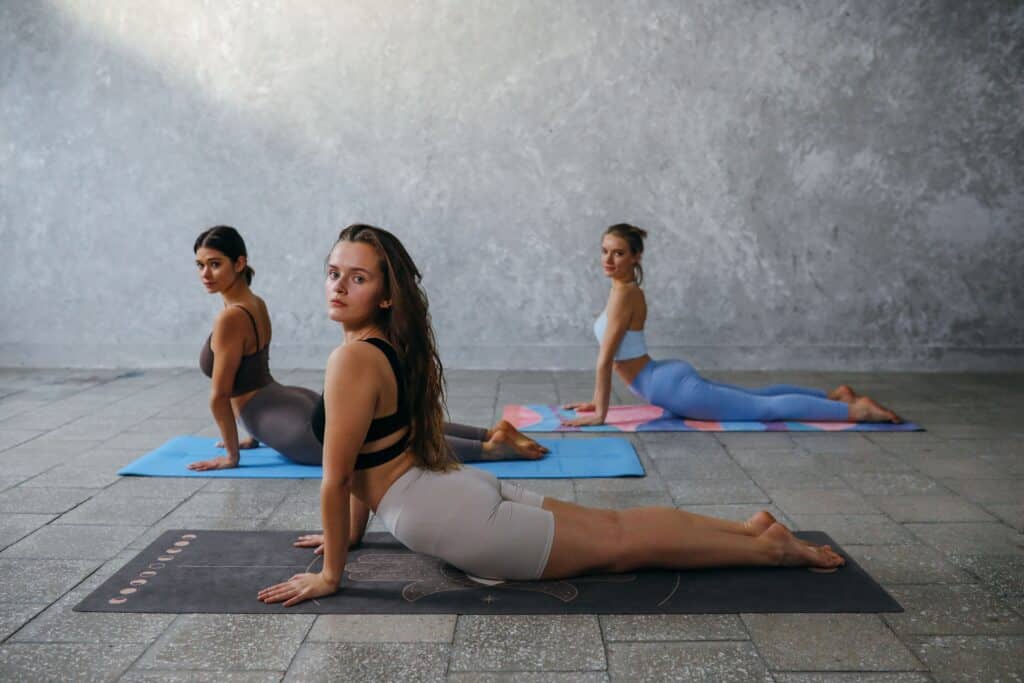
Step 3: Use cat cow for spinal motion
Come to hands and knees. Inhale as you gently arch your back and lift your chest. Exhale as you round your spine and tuck your tailbone. Move for 8 to 12 slow rounds.
Do not chase a big range of motion. The goal is to lubricate the spine and reduce stiffness. This is useful after squats, deadlifts, cycling, rowing, or long desk work.
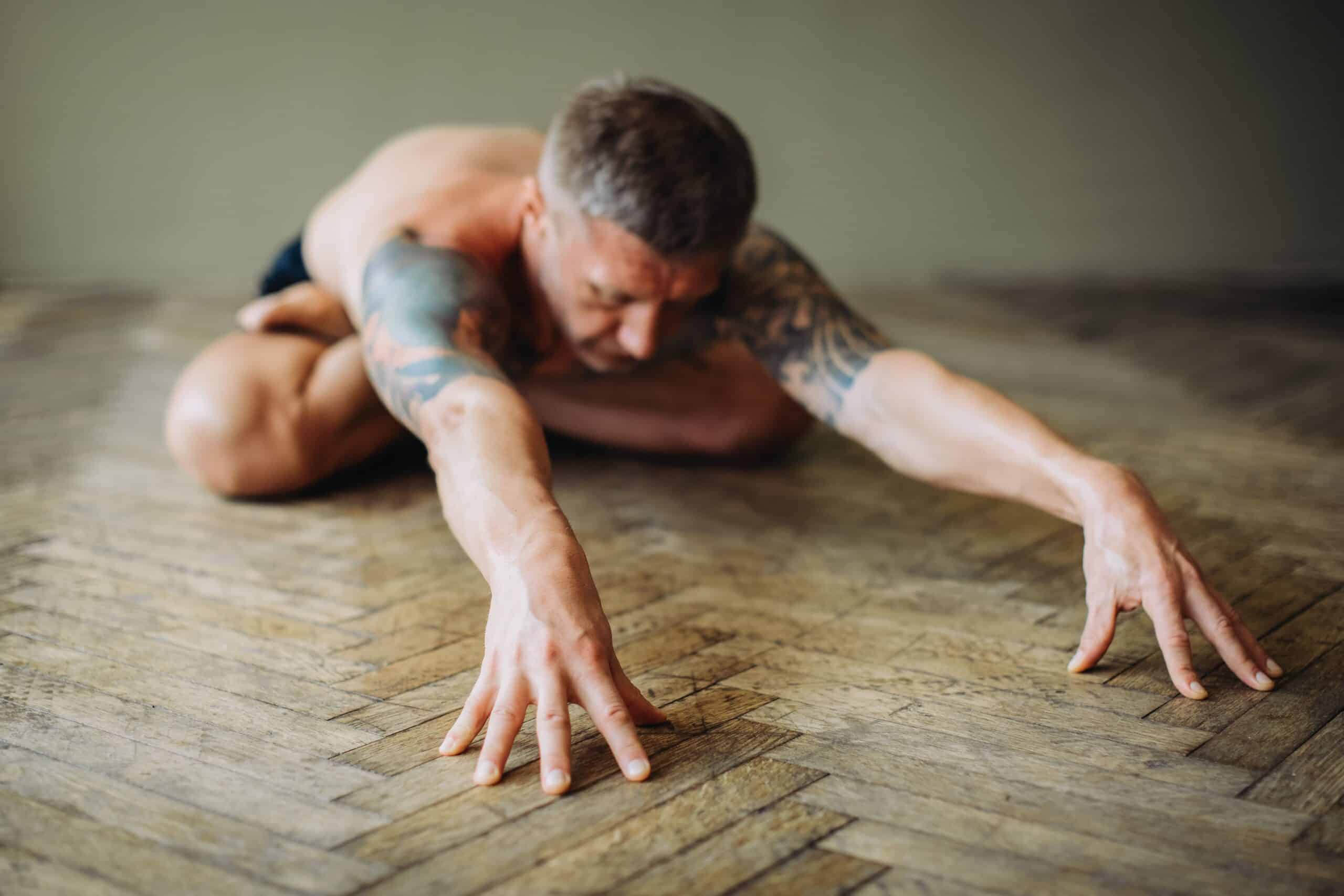
Step 4: Move into child pose with side reach
Sit your hips toward your heels and reach your arms forward. If your knees dislike this position, place a cushion between your thighs and calves. Hold for 30 to 60 seconds while breathing slowly.
Then walk both hands to the right and breathe into the left side of your ribs. Hold for 20 to 30 seconds. Switch sides. This can help the lats, low back, and rib area relax after upper body training.

Step 5: Add low lunge for hip flexors
Step one foot forward and lower the opposite knee to the floor. Keep your ribs stacked over your pelvis. Gently shift forward until you feel the front of the hip open. Hold for 30 seconds per side.
Avoid pushing the pelvis hard toward the floor. A small shift is enough. This pose is helpful after running, lunges, cycling, and long sitting.
Step 6: Use reclined figure four for glutes
Lie on your back. Cross your right ankle over your left thigh. Pull the left thigh toward your chest until you feel a comfortable stretch in the right glute. Hold for 30 to 45 seconds, then switch sides.
If this irritates your knee, flex the foot of the crossed leg and reduce the pull. The stretch should stay in the hip, not the knee.
Step 7: Use legs up the wall for downregulation
Sit beside a wall, lie back, and place your legs up the wall. Rest your arms by your sides. Stay for 2 to 5 minutes. This is not a hamstring contest. Move farther from the wall if your legs pull too strongly.
This position can feel especially good after long runs, heavy leg days, or standing work. It also pairs well with evening recovery routines because it feels calming.
Step 8: Finish with easy walking
After the floor work, stand up slowly and walk for 3 to 5 minutes. This helps your body transition back to normal movement. If your soreness improves after the routine, you probably chose the right intensity. If you feel worse, shorten the routine next time or remove the pose that caused symptoms.
How often to do recovery yoga
For general soreness, 10 to 20 minutes is enough. Use it 2 to 5 times per week depending on your training load. After very hard sessions, choose shorter practices. On rest days, you can use a longer session if it still feels easy.
Yoga works even better when paired with other basics. For nutrition support, review protein powder for muscle recovery and magnesium for muscle recovery. If you want non exercise recovery options, compare methods in best muscle recovery tools.
Advanced Analysis and Common Pitfalls
The biggest mistake is treating recovery yoga like flexibility training. Recovery is not the time to prove how far you can stretch. Your muscles are already stressed from training. Adding aggressive end range stretching can make soreness feel worse, especially after heavy eccentric work like downhill running, Romanian deadlifts, deep squats, or high volume pull ups.
A review in the Journal of Athletic Training explains that delayed onset muscle soreness involves tenderness, stiffness, and temporary strength loss after unfamiliar exercise. That means your recovery choices should protect performance while soreness settles.
Common problems and what to do instead
| Problem | Why it happens | Better choice |
|---|---|---|
| Stretching too deeply after leg day | Sore tissue is sensitive and may react poorly to force | Use light mobility, short holds, and supported poses |
| Doing hot power yoga for recovery | Heat and intensity can increase fatigue and dehydration | Choose gentle yoga, easy walking, and fluids |
| Ignoring sharp pain | A strain or tear may need protection instead of stretching | Stop the session and assess injury signs |
| Holding your breath | Your nervous system reads the pose as stress | Use slow nasal breathing and longer exhales |
| Doing the same poses for every body part | Different sports stress different tissues | Match poses to the muscles trained that day |
When yoga is not the right tool
Skip recovery yoga and get guidance if you notice swelling, bruising, numbness, tingling, pain that worsens each day, or a sudden loss of strength. Those are not normal recovery signs. They may point to a strain, joint issue, nerve irritation, or another problem that needs a different plan.
Also be careful with yoga if you are returning from surgery, have a disc related back issue, have unstable joints, or are pregnant. Yoga can still be useful, but the routine should be modified by a qualified professional.
Best poses by training type
For runners, focus on low lunge, reclined hamstring stretch with a strap, calf wall stretch, and legs up the wall. For lifters, use cat cow, child pose, figure four, thoracic rotation, and supported squat breathing. For desk workers who train after work, add neck and shoulder mobility before floor poses.
If your soreness is severe after nearly every workout, your issue may not be a lack of stretching. It may be poor programming, low recovery capacity, too little food, or not enough sleep. Supplements can help some people, but they do not replace the basics. If you are comparing options, start with muscle recovery supplements and best amino acids for muscle growth and recovery.
How to know if it is working
A good recovery yoga session should leave you feeling looser, calmer, and more coordinated. You should not feel drained. You should not feel new pain. Your next workout should feel normal or slightly better, not weaker because you overstretched.
Track three simple markers for two weeks:
- Morning stiffness from 0 to 10
- Soreness before training from 0 to 10
- Range of motion during warm ups
If these improve, your routine is helping. If they stay the same, shorten the holds, reduce intensity, or address sleep, hydration, and training volume.
For heat based recovery, some people also use saunas or warm baths. These can feel good, but timing and hydration matter. Read infrared sauna for muscle recovery if you want to compare yoga with heat therapy.
The Mayo Clinic notes that regular movement and stretching can support flexibility and function when performed safely. Their stretching overview reinforces a simple rule that applies here: avoid pain and use control.

Conclusion
Yoga can be a useful recovery tool when it is gentle, specific, and honest. Use it to breathe better, move sore muscles lightly, and restore comfortable range of motion. Do not use it to force flexibility after hard training.
Start with 10 minutes after your next workout. Choose breathing, cat cow, child pose, low lunge, figure four, and legs up the wall. Keep the effort low. If a pose creates sharp pain or makes soreness worse, remove it.
The best results come from combining yoga for muscle recovery with sleep, protein, hydration, smart training volume, and realistic rest days. Try the routine for two weeks, track your soreness, and adjust based on how your body responds.
FAQ
Is yoga good for muscle recovery after lifting?
Yes, gentle yoga can help after lifting by reducing stiffness, improving circulation, and calming the nervous system. Avoid deep stretching right after heavy strength work because sore muscles may be more sensitive.
How long should I do yoga for muscle recovery?
Most people only need 10 to 20 minutes. A short, easy session is usually better than a long intense practice. If you feel more tired afterward, the session was too hard.
Should I do yoga when my muscles are very sore?
You can do gentle yoga if the soreness is dull and improves with movement. Do not do yoga if you have sharp pain, swelling, bruising, weakness, or pain that gets worse as you move.
What type of yoga is best for recovery?
Restorative yoga, gentle yoga, slow flow, and supported mobility work are best for recovery. Power yoga, hot yoga, and intense vinyasa classes may be too demanding when your body needs rest.
Can yoga replace rest days?
No. Yoga can be part of a rest day, but it does not replace sleep, nutrition, hydration, and reduced training load. If your body is exhausted, full rest may be better than any movement session.