


### Blog Post:
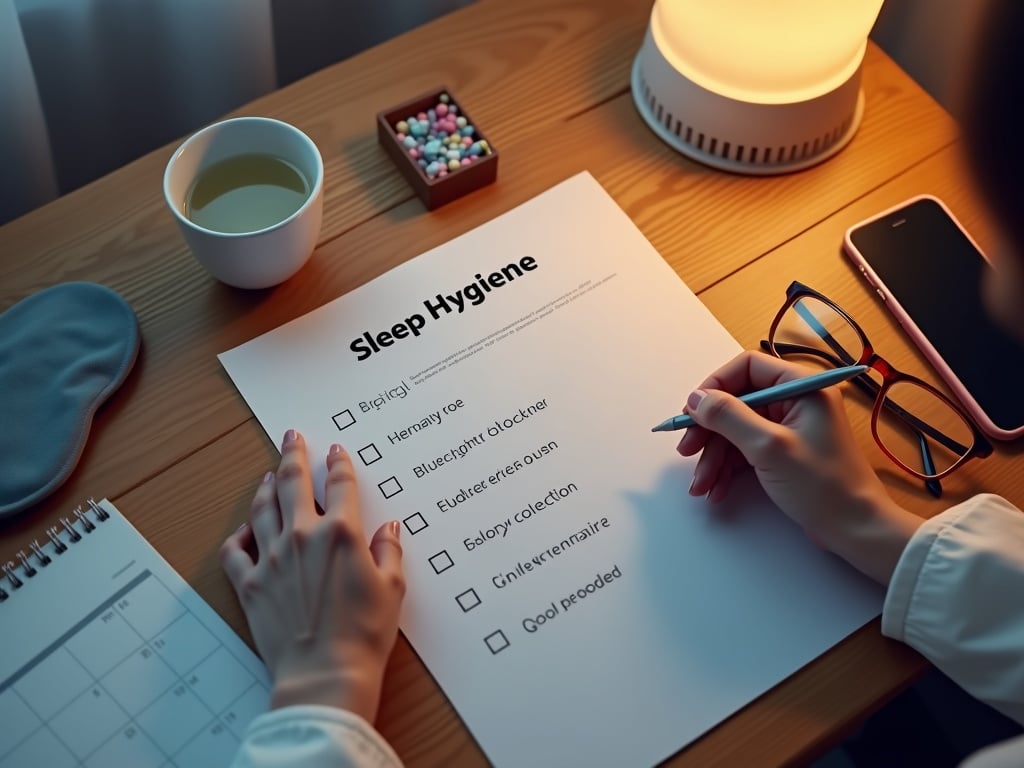
good sleep hygiene checklist is the simplest way to turn vague sleep advice into a nightly routine you can actually follow.
If you wake up tired, scroll in bed, drink caffeine late, or sleep at different times each night, your body is getting mixed signals. Sleep hygiene fixes that by making your bedroom, schedule, light exposure, food timing, and evening habits work together.
This guide gives you a practical checklist, not a perfect lifestyle plan. Use it to find the one or two habits that are hurting your sleep the most, then improve them in a realistic order.
Key Takeaways
- Good sleep hygiene works best when your wake time, morning light, caffeine cutoff, and bedtime routine stay consistent.
- Your bedroom should be cool, dark, quiet, and used mainly for sleep and intimacy, not scrolling, work, or stress planning.
- If insomnia, loud snoring, breathing pauses, restless legs, or daytime sleepiness continue, sleep hygiene alone is not enough and medical help may be needed.
- What Good Sleep Hygiene Means And Why It Works
- Good Sleep Hygiene Checklist You Can Follow Tonight
- Advanced Analysis And Common Pitfalls
- Conclusion
- FAQ
What Good Sleep Hygiene Means And Why It Works
Sleep hygiene means the daily behaviors and bedroom conditions that help your brain feel sleepy at night and alert during the day. It matters because sleep is controlled by two main systems: your circadian rhythm, which is your internal body clock, and sleep pressure, which builds the longer you stay awake.

When your habits support both systems, sleep usually becomes easier. When your habits fight them, your body may feel awake at bedtime even if you are exhausted.
For example, bright morning light tells your brain that the day has started. Dim light at night helps your brain prepare for melatonin release. A steady wake time trains your body to expect sleep at a similar hour. Late caffeine, long naps, and phone use in bed can push your sleep later and make your night feel broken.
The Centers for Disease Control and Prevention recommends consistent sleep and wake times, a quiet and dark bedroom, and avoiding large meals, caffeine, and alcohol close to bedtime. These basics sound simple, but they work because they reduce conflict between your schedule and your biology.
If your sleep timing feels completely shifted, start with light and wake time before buying products. Our guide on how to reset circadian rhythm explains how morning sunlight, meal timing, and evening light control your internal clock.
Sleep hygiene is not a cure for every sleep problem. It can improve many cases of poor sleep, but it will not fix untreated sleep apnea, severe anxiety, chronic pain, medication side effects, or neurological sleep disorders by itself. If you snore loudly, wake gasping, or feel sleepy while driving, look at condition specific advice like sleep hygiene for sleep apnea and speak with a clinician.
The goal is not to create a rigid routine that makes you anxious. The goal is to remove common barriers so natural sleep has a better chance to happen.
Good Sleep Hygiene Checklist You Can Follow Tonight
Use this checklist in order. Do not try to perfect all of it in one night. Pick the changes that address your biggest problem first.
1. Set One Wake Time And Keep It Daily
Your wake time is the anchor of your sleep schedule. Choose a time you can keep on weekdays and most weekends. If your current wake time changes by three hours, start by narrowing the gap to one hour.
A steady wake time helps your body predict when to release alerting hormones in the morning and when to build sleepiness at night. Sleeping in for hours after a bad night feels good short term, but it often makes the next night harder.
2. Get Outdoor Light Within The First Hour
Go outside for 10 to 20 minutes soon after waking. Cloudy light still helps. If you cannot go outside, sit near a bright window, but outdoor light is stronger.
This is one of the highest impact habits for people who feel tired in the morning and wired at night. The National Center for Biotechnology Information explains that light is a major signal for circadian timing.
3. Cut Caffeine Early Enough
Caffeine can stay active for many hours. A good starting rule is to stop caffeine after lunch. If you are sensitive, stop by late morning. Watch hidden sources like pre workout drinks, energy drinks, strong tea, chocolate, and some pain relievers.
If you train hard and use recovery supplements, check labels carefully. Some blends contain stimulants. If your sleep is tied to workout recovery, review options like magnesium for muscle recovery, but avoid using supplements as a substitute for basic sleep habits.
4. Use A 30 Minute Wind Down Routine
Your brain needs a repeatable signal that the day is ending. Keep it boring and simple. Lower lights, wash up, prepare clothes for tomorrow, read something calm, stretch gently, or listen to quiet audio.
Do not use this time to solve life problems. If worries appear, write them on paper with one next action for tomorrow. The point is not to erase thoughts. The point is to stop negotiating with them in bed.
5. Make The Bedroom Dark
Light at night can delay sleepiness. Block streetlights, device LEDs, and early morning sun if they wake you too soon. Use curtains, an eye mask, or small pieces of tape over bright indicator lights.
If light is your main issue, see our Blackout Curtains Review for a practical way to compare room darkening options without overbuying.
6. Reduce Noise Without Making Silence The Goal
Silence is not always realistic. Traffic, neighbors, pets, and household noise can interrupt sleep. A fan, sound machine, or steady background audio can mask sudden sounds.
Keep volume low and consistent. If you are new to this, our White Noise Essentials guide explains how to place a sound machine and choose a sound that does not become annoying after a few nights.
7. Keep The Room Cool And Comfortable
Many people sleep better in a cooler room. If you wake hot, try lighter bedding, breathable sheets, a fan, or a temperature adjustment. If you wake cold, add layers that can be removed easily.
Bedding matters because discomfort causes small awakenings. A heavy comforter can feel cozy but may trap heat. If your bedding is part of the problem, compare materials in our guide on How to Choose the Ultimate Down Comforter for Amazing Sleep.
8. Keep Screens Out Of The Last Part Of The Night
Phones create two problems: light and mental stimulation. Even when blue light is reduced, content can keep your brain alert. News, work messages, shopping, social media, and short videos can all train your bed to feel like an entertainment zone.
Set a phone parking spot outside the bed. If you use your phone as an alarm, place it across the room. This also helps you get out of bed when the alarm rings.
9. Time Food And Alcohol Carefully
A large meal too close to bed can cause reflux, heat, and discomfort. Going to bed hungry can also wake you. Aim for dinner a few hours before sleep. If needed, choose a small snack that is easy to digest.
Alcohol may make you drowsy, but it often fragments sleep later in the night. The National Heart, Lung, and Blood Institute notes that sleep deficiency affects health, performance, and safety, so it is worth treating alcohol related sleep disruption seriously.
10. Use The Bed For Sleep, Not Wakeful Struggle
If you cannot sleep after a reasonable amount of time, get out of bed and do something quiet in low light. Return when sleepy. This helps your brain reconnect the bed with sleep instead of frustration.
Do not watch the clock. Clock checking raises pressure and makes the bed feel like a test. Turn the clock away or use an alarm that does not require screen checking.
11. Add Gentle Body Relaxation
Physical tension can keep sleep light. Try slow breathing, progressive muscle relaxation, or gentle stretching. If you prefer movement, a short recovery routine from yoga for muscle recovery can help your body downshift without turning bedtime into exercise.
A weighted blanket may help some people feel calmer, but it is not for everyone. It can feel too warm or restrictive. If you are curious, read The Ultimate Weighted Blanket Guide for Deep, Relaxing Sleep before choosing a weight.
Advanced Analysis And Common Pitfalls
Most people do not fail because sleep hygiene is too complicated. They fail because they choose the wrong first habit, expect results overnight, or use one good habit to excuse several disruptive ones.
The American Academy of Sleep Medicine emphasizes regular sleep habits, a relaxing routine, and a sleep friendly bedroom. The hard part is applying those basics consistently when life is busy.
Common Pitfall 1: Fixing Bedtime Before Wake Time
Many people try to force an earlier bedtime while still sleeping late in the morning. This usually leads to lying awake. Start with wake time and morning light. Bedtime will move earlier more naturally once sleep pressure and circadian timing line up.
Common Pitfall 2: Taking Long Naps To Recover
A short nap can help, but long or late naps reduce sleep pressure. If you nap, keep it early and brief. If you have insomnia, consider pausing naps for two weeks while you rebuild nighttime sleep drive.
Common Pitfall 3: Treating Sleep Hygiene Like A Moral Test
One imperfect night does not ruin the plan. The problem is when exceptions become the schedule. If weekends shift your sleep by several hours, Monday will feel like jet lag.
Common Pitfall 4: Ignoring Pain, Breathing, Or Mental Health
Sleep hygiene improves the conditions for sleep. It does not replace care for chronic pain, depression, anxiety, sleep apnea, restless legs, or medication issues. If pain is a major reason you wake, recovery tools, mobility work, and medical advice may matter as much as bedtime habits.
Common Pitfall 5: Buying Products Before Tracking Patterns
blackout curtains, white noise machines, cooling bedding, and weighted blankets can help the right person. But buying everything at once makes it hard to know what worked. Track one change for at least a week before adding another.
| Problem | Likely Cause | Best First Fix | When To Get Help |
|---|---|---|---|
| Wired at bedtime | Late light, late caffeine, irregular wake time | Morning outdoor light and earlier caffeine cutoff | If insomnia lasts more than a month |
| Waking at 3 a.m. | Alcohol, stress, room temperature, sleep apnea | Reduce alcohol and cool the room | If you wake gasping or snore loudly |
| Cannot wake up | Too little sleep, delayed schedule, poor morning light | Fixed wake time plus outdoor light | If daytime sleepiness affects driving or work |
| Restless body | Stress, discomfort, pain, restless legs | Gentle stretching and a calmer routine | If leg sensations are intense or frequent |
| Sleep feels light | Noise, light, heat, alcohol, anxiety | Control bedroom cues one at a time | If sleep stays unrefreshing despite enough hours |
A useful way to troubleshoot is to track four items for seven nights: wake time, caffeine cutoff, screen cutoff, and sleep quality. Do not overcomplicate it with wearable data at first. A simple note can reveal obvious patterns.
Be careful with sleep anxiety. If you obsess over perfect sleep, the routine can become another stressor. Keep the checklist flexible. A consistent 80 percent routine is better than a perfect plan you abandon after three days.
Also remember that sleep needs vary. Many adults do best with seven to nine hours, but quality matters too. If you spend enough time in bed and still feel exhausted, the issue may not be discipline. It may be fragmented sleep, breathing disruption, mood strain, or another medical factor.

Conclusion
Better sleep usually starts with boring habits done consistently. Set a stable wake time, get morning light, cut caffeine earlier, dim your evenings, protect your bedroom from light and noise, and stop using the bed as a place to scroll or worry.
Start small tonight. Choose one habit from this guide and follow it for seven days before adding another. If symptoms like breathing pauses, severe insomnia, or unsafe daytime sleepiness continue, get professional help instead of trying to self fix forever.
Use this good sleep hygiene checklist as your weekly reset tool, then adjust it around your real schedule and your real sleep barriers. Your next step is simple: pick your wake time, set your caffeine cutoff, and prepare your bedroom before tonight.
FAQ
How long does it take for sleep hygiene to work?
Many people notice small improvements within one week, especially from a fixed wake time and morning light. Bigger changes can take two to four weeks because your body clock needs repeated signals.
What is the most important sleep hygiene habit?
A consistent wake time is usually the best starting point. It anchors your circadian rhythm and helps your body build sleepiness at a predictable time each night.
Can good sleep hygiene cure insomnia?
It can help mild or behavior related insomnia, but it may not be enough for chronic insomnia. Cognitive behavioral therapy for insomnia is often more effective when sleeplessness becomes persistent.
Should I stay in bed if I cannot sleep?
No. If you feel alert and frustrated, get out of bed and do something quiet in dim light. Return when sleepy. This helps your brain associate bed with sleep instead of struggle.
Is using white noise good sleep hygiene?
It can be helpful if sudden noise wakes you. Keep the volume low, place the source away from your head, and use a steady sound that does not become distracting.
—