


how long do melatonin gummies last depends on what you mean: the sleepy effect usually lasts about 4 to 8 hours, while an unopened bottle often stays usable until the printed expiration date.
That simple answer is useful, but it is not enough if you are trying to avoid next morning grogginess, choose the right dose, or figure out whether an old bottle is still safe. melatonin gummies are easy to take, which is exactly why people often take too much, take them too late, or use them for the wrong sleep problem.
This guide explains how long melatonin gummies last in your body, how long they last on the shelf, when to take them, and what mistakes make them less effective.
Key Takeaways
- Most melatonin gummies start working in 30 to 60 minutes and may affect sleepiness for 4 to 8 hours.
- The best timing is usually 30 to 90 minutes before bed, but some circadian rhythm issues need earlier timing.
- More melatonin is not always better. Higher doses can increase vivid dreams, headaches, and next day grogginess.
- How Melatonin Gummies Work and Why Timing Matters
- How to Use Melatonin Gummies Step by Step
- Advanced Analysis and Common Pitfalls
- Conclusion
- FAQ
How Melatonin Gummies Work and Why Timing Matters
Melatonin is a hormone your brain naturally releases when darkness signals that it is time to prepare for sleep. A gummy version adds outside melatonin to that signal. It does not work like a strong sedative. Instead, it nudges your sleep timing and may make it easier to fall asleep when your body clock is ready.
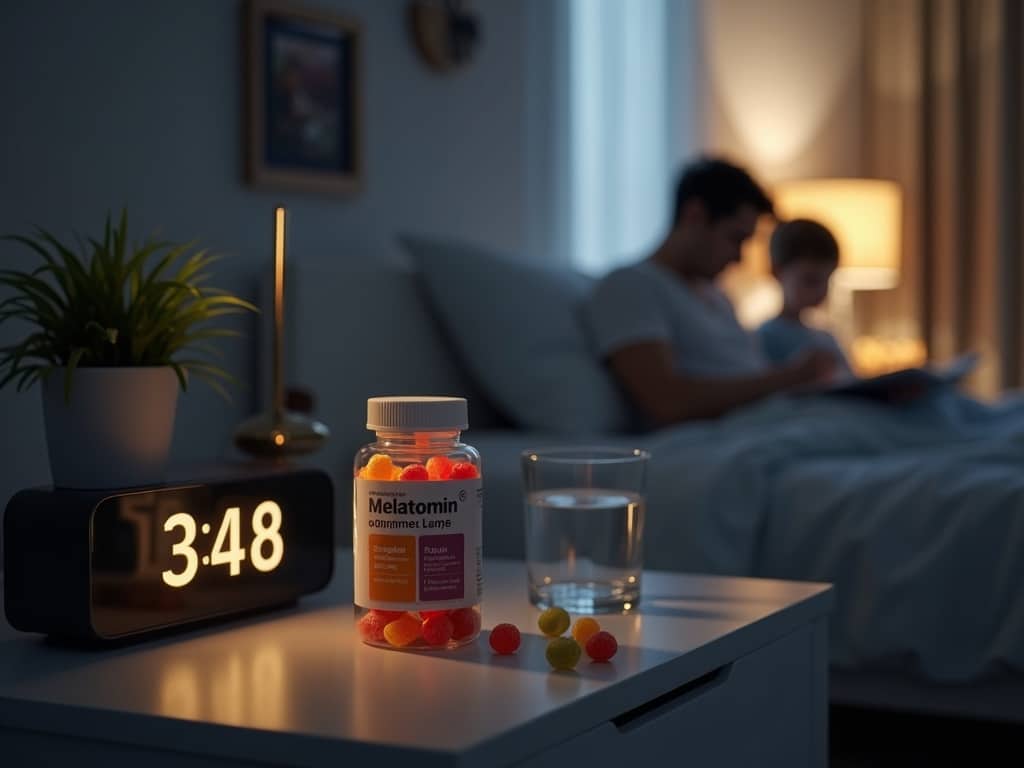
For most adults, melatonin gummies begin to work within 30 to 60 minutes. Some people feel calmer sooner, especially if they take them on an empty stomach. Others need closer to 90 minutes, especially after a large meal or if the gummy contains added ingredients such as magnesium, L theanine, or herbal extracts.
The noticeable sleepy effect usually lasts 4 to 8 hours. That does not mean melatonin stays at a high level the entire time. According to medical references such as StatPearls through the National Library of Medicine, melatonin has a relatively short half life, often around 20 to 50 minutes. Still, the sleep timing signal can influence your night for longer than the blood level suggests.
This is why a gummy taken at 2 a.m. can make you feel slow at 7 a.m. The dose may be mostly cleared, but your sleep rhythm was shifted at the wrong time.
There are two different “lasts” to understand:
- How long the effect lasts: Usually 4 to 8 hours, depending on dose, timing, metabolism, food, age, and sensitivity.
- How long the product lasts: Usually until the expiration date if stored correctly, though opened bottles may lose quality sooner.
Most gummies are immediate release, meaning they dissolve and absorb fairly quickly. Some products are extended release and are designed to support staying asleep. If your label says “time release,” “slow release,” or “extended release,” the effect may last longer and may increase next morning drowsiness.
Melatonin is best for sleep timing issues, not every type of insomnia. It may help when your sleep schedule is delayed, when travel shifts your body clock, or when light exposure at night has pushed your rhythm later. If your main issue is pain, stress, sleep apnea, alcohol use, or a poor sleep environment, melatonin may feel weak or inconsistent.
If your sleep schedule feels completely off, read our guide on how to reset circadian rhythm. Melatonin works better when it is paired with morning light, consistent wake times, and evening light control.
How to Use Melatonin Gummies Step by Step
The goal is not to feel knocked out. The goal is to send a clear sleep signal at the right time. Use the steps below to make melatonin gummies more predictable.
Step 1: Decide why you are taking it
Before taking a gummy, identify the problem. Are you trying to fall asleep earlier? Are you recovering from jet lag? Are you waking up at 3 a.m.? Are you using it because stress is high?
Melatonin is most useful when your timing is off. If you already feel sleepy but cannot stay asleep, the answer may be sleep hygiene, breathing issues, room temperature, caffeine, alcohol, or anxiety rather than more melatonin.
For a practical habit audit, use our good sleep hygiene checklist before increasing your dose.
Step 2: Start with a low dose
Many gummies contain 3 mg, 5 mg, or even 10 mg per serving. That sounds normal because it is common on store shelves, but it is not always necessary.
Many adults do well with 0.5 mg to 1 mg. Some need 2 mg to 3 mg. Higher doses may help some people, but they also raise the chance of side effects. The National Center for Complementary and Integrative Health notes that short term use appears safe for many adults, but long term safety and correct dosing are less certain.
If your gummy is 5 mg and you are sensitive, consider cutting it in half if the label allows it and the gummy can be split evenly. Do not do this with products that have special release technology unless the label says it is acceptable.
Step 3: Take it 30 to 90 minutes before bed
For general sleep support, take melatonin gummies 30 to 90 minutes before your planned bedtime. If you want to be asleep at 10:30 p.m., a good test window is 9:00 p.m. to 10:00 p.m.
If you take it too early, you may feel sleepy before you are ready for bed. If you take it too late, you may still feel heavy in the morning.

Step 4: Control light after taking it
Melatonin works against your environment. If you take a gummy and then stare at a bright phone, work under overhead lights, or watch intense content in bed, you are sending mixed signals.
Dim the lights after taking it. Use warm light. avoid bright screens or use strong blue light reduction. Better yet, create a repeatable wind down routine.
For people who wake easily from sound, our White Noise Essentials guide explains how to use steady background sound without making your room too loud.
Step 5: Keep your wake time consistent
The wake time anchors your body clock. If you sleep until noon after taking melatonin, your rhythm may drift later again. Pick a wake time and keep it steady, even on weekends if possible.
Morning sunlight is especially important. Get outdoor light within the first hour after waking. Even 10 to 20 minutes can help your brain understand that daytime has started.
Step 6: Store gummies correctly
Melatonin gummies can degrade when exposed to heat, moisture, and sunlight. Keep them in the original container, tightly closed, away from bathrooms, cars, windows, and humid kitchens.
Unopened gummies are usually best until the printed expiration date. After opening, quality may decline faster, especially if the bottle is exposed to moisture. If the gummies smell odd, change texture, stick together unusually, or show discoloration, replace them.
Step 7: Know when not to use it
Do not combine melatonin with alcohol. Alcohol can worsen sleep quality and may increase dizziness or next day fatigue.
Talk to a clinician before using melatonin if you are pregnant, breastfeeding, taking blood thinners, using seizure medicine, managing an autoimmune condition, or giving it to a child. The Sleep Foundation provides a helpful overview of use cases and safety considerations, but personal medical advice should come from your healthcare provider.
If snoring, choking, gasping, or morning headaches are part of your sleep problem, melatonin is not the fix. Start with our guide on sleep hygiene for sleep apnea and ask a medical professional about evaluation.
Advanced Analysis and Common Pitfalls
Melatonin gummies are simple, but the mistakes are predictable. Most problems come from dose, timing, product quality, or expecting melatonin to solve a sleep issue it cannot solve.
Pitfall 1: Taking too much
A higher dose can feel stronger, but it can also backfire. Some people report headaches, nausea, dizziness, vivid dreams, irritability, or a hungover feeling the next morning.
If 5 mg makes you groggy, do not jump to 10 mg. Move in the other direction. Try less, earlier, or less often.
Pitfall 2: Taking it at the wrong time
Melatonin is a timing signal. Taking it in the middle of the night is one of the most common reasons people feel foggy in the morning.
If you wake at 3 a.m., taking a gummy may help you fall back asleep, but it may also shift your clock later and make waking harder. For repeated night waking, look at caffeine timing, alcohol, stress, temperature, noise, and possible medical causes.
Pitfall 3: Ignoring the bedroom environment
A gummy cannot outwork a bright, noisy, hot bedroom. Light is especially important because it suppresses your natural melatonin signal.
If outdoor lights or early sunrise wake you too soon, our block light can help you choose room darkening options that actually block light.
Pitfall 4: Using it every night without a plan
Some people use melatonin nightly for months because it seems harmless. For many adults, short term use is reasonable, but ongoing use should have a purpose. If you need it every night, ask why your body is not producing or responding to its own sleep signals.
Build a plan around wake time, morning light, caffeine cutoff, evening light, room temperature, and stress reduction. Supplements should support the plan, not replace it.
Pitfall 5: Choosing gummies with poor label accuracy
Supplement quality can vary. A study published in JAMA found that some melatonin gummy products contained different amounts of melatonin than listed on the label. Some also contained cannabidiol, known as CBD, when consumers may not have expected it.
This matters because a “5 mg” gummy may not always behave like a 5 mg gummy. Choose brands with third party testing when possible. Look for USP, NSF, Informed Choice, or clear independent lab testing.
| Situation | How Long It May Last | Best Action | Common Problem |
|---|---|---|---|
| Low dose immediate release gummy | About 4 to 6 hours | Take 30 to 60 minutes before bed | May feel too subtle if sleep habits are poor |
| Higher dose gummy | About 6 to 8 hours or longer for sensitive users | Use only if lower doses fail | Morning grogginess, vivid dreams, headache |
| Extended release gummy | May last through more of the night | Consider only for staying asleep problems | Higher chance of next day sleepiness |
| Gummy taken after midnight | May affect the next morning | Avoid unless advised by a clinician | Clock shifts later and waking gets harder |
| Old or poorly stored gummies | Effect may be weaker or inconsistent | Replace if expired or changed in texture | Unpredictable dosing and poor taste |
What about children and teens?
Parents should be careful. Melatonin is widely used for children, but it should not be treated like candy. Gummies are especially risky because they taste sweet and can be accidentally overused.
Use child resistant storage. Keep the bottle out of reach. Talk with a pediatric clinician before giving melatonin to a child, especially if sleep problems are frequent, behavior related, or linked with neurodevelopmental conditions.
What if melatonin stops working?
Sometimes melatonin seems to stop working because the schedule drifts again. Other times the dose was too high, bedtime became inconsistent, or late light exposure returned.
Reset the basics first. Wake at the same time, get morning light, dim lights at night, stop caffeine earlier, and keep the bedroom cool. If tension or soreness is disrupting sleep, recovery habits can also matter. Our guide to magnesium for muscle recovery covers why some people use magnesium for muscle relaxation and sleep support.
Comfort tools can also help if restlessness is stress related. A calming option like a weighted blanket may support relaxation, though it should not be used as a substitute for medical care when sleep symptoms are severe.

Conclusion
Melatonin gummies usually start working in 30 to 60 minutes and can influence sleepiness for about 4 to 8 hours. The exact duration depends on dose, timing, release type, food, age, metabolism, and sensitivity. On the shelf, gummies usually last until the expiration date when stored away from heat, moisture, and light.
The smartest approach is simple: start low, take it before your target bedtime, control evening light, keep your wake time steady, and avoid using melatonin to cover up untreated sleep problems.
If you came here asking how long do melatonin gummies last, use tonight as a test: choose the lowest practical dose, take it 30 to 90 minutes before bed, write down how you feel tomorrow, and adjust based on results rather than habit.
FAQ
How long do melatonin gummies last in your system?
Most people feel the effect for about 4 to 8 hours. The hormone itself has a short half life, but the sleep timing signal can last longer. Higher doses, extended release formulas, and late night use can increase next morning grogginess.
How long before bed should I take a melatonin gummy?
Most adults should take it 30 to 90 minutes before bed. If you feel groggy the next morning, try a lower dose or take it slightly earlier in the evening.
Do melatonin gummies expire?
Yes. Follow the expiration date on the bottle. Store gummies in a cool, dry, dark place with the lid tightly closed. Replace them if they smell strange, change color, become unusually sticky, or are past the expiration date.
Is 10 mg of melatonin too much?
For many people, 10 mg is more than needed. Some adults tolerate it, but higher doses can increase headaches, vivid dreams, dizziness, and morning sleepiness. Many people do better with 0.5 mg to 3 mg.
Can I take melatonin gummies every night?
Some adults use melatonin short term without problems, but nightly long term use should have a clear reason. If you need it every night, review your sleep schedule, light exposure, caffeine, stress, and possible medical sleep issues with a clinician.